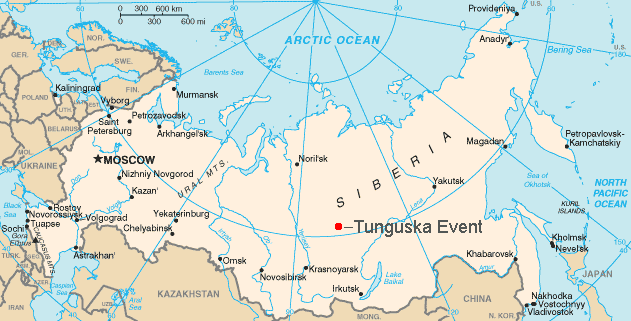
From the European plain of Russia to the Pacific coast, crossing many time zones, going across 17 rivers, traveling through 2 continents, and many different land forms. That is only a small part of what the Trans-Siberian Railroad is.
The line starts in Moscow, and ends at Vladivostok, in Russia's far east. There is the Trans-Mongolian Railway and the Trans-Manchurian Line. You start from Moscow, but rather than go all the way to Vladivostok, you stop at Ulan Ude and follow the railroad to Beijing via Mongolia. This is the Trans-Mongolian Railway. To travel the Trans-Manchurian Railway, one stops at Chita, and takes that railroad spur to Beijing via the Jilin province of China(formerly known as Manchuria).

In many ways, the Trans-Siberian Railroad is a major geographic feat. The distance of this railroad is quite telling. It is the world's longest railway line.There is literally no other railway line to cross TWO(2) continents. It is one reason it is such a geographic feat. However, this is not the biggest reason why.
In order to get the whole idea of this railroad, one has to know the work that it took to get this railroad built.
Millions of people moved to Siberia from the western portion of Russia. between the 19th and early 20th century. Many were settlers. Many were also prisoners exiled there. For a long time, Siberia had issues with transportation. Before the building of the railroad, rivers served as the main transportation source, when the rivers were not frozen. When the rivers froze over, the rivers were used for transporting goods via carriage or any other form of transportation not involving water. The Great Siberian Route was a major road of transportation.
Previous railway projects for Siberia had been proposed before, but were basically ignored. It was thought to be impossible to build a railway across all of Russia, all the way to the far eastern reaches of Siberia. However, in 1890, the building of the Trans-Siberian Railroad would commence in 1891.It was constructed between 1891 and 1916. Like the American railroad, the Trans-Siberian started building at two different ends. One part started in western Russia, and the other part started in the far eastern part of Russia, around Vladivostok.
Building across long distances was going to be hard enough. However, there were many geographical challenges along the way. Permafrost was one major factor. Digging through permafrost in the 1890s would have been a very difficult task, going through frozen soil. When the soil thaws, its muddy and not stable. There were also strong rivers, many lakes, and swamps. Mountains had to be crossed as well. The Siberian winters are quite harsh as well. Animals were a factor as well. With bears and tigers around, there was an added danger of being killed via being attacked. Building around Lake Baikal was difficult. Because of the lack of flat coastline, tunnels had to be built out of the hills or platforms had to be made.
Another thing to consider was the onset of the Russo-Japanese War during the early 1900s. With Japan across the water from Russia(on the Pacific side), there was a rush to connect both the western and eastern spurs to get soldiers and weapons to Japan via Vladivostok.
The railway line is also of importance economically. It is a major supply line for Siberia's large cities and populated areas in Siberia. It has helped the development of industry and agriculture in Siberia, and cities along the line have developed, such as Krasnoyarsk, Khabarovsk, Vladivostok, Omsk, and other Siberian cities. Siberia's population has grown along the rail line. The rail line has helped in transporting resources such as coal, timber, and iron.
The Trans-Siberian Railroad is a major geographic feat because of the distances spanned, the economic benefits it provided, and furthermore, the battle of many geographic challenges, such as the weather, and geological problems. This railway was built against all odds, and still runs today.

Vladivostok Station.
Sources:
http://www.coolfamily.com/Siberia.htm
http://books.google.com/books?id=mDJjgJWT34AC&pg=PA60&lpg=PA60&dq=trans+siberian+railway;swamps;mountains,permafrost&source=bl&ots=sM5Adc6BWH&sig=9-fU4ztIzwOA8LK7YjVg8xaI7Jk&hl=en&sa=X&ei=9E3TUeneO4OQ9gT5h4DYDA&ved=0CFEQ6AEwBA#v=onepage&q=trans%20siberian%20railway%3Bswamps%3Bmountains%2Cpermafrost&f=false
http://www.irkutsk.org/fed/transsib.html
http://www.frontiersoftravel.com/journey_summary.php?name=Trans-Siberian_Railway
http://rbth.ru/articles/2010/12/08/transsiberian_to_expand_as_russia_turns_east05189.html
http://www.russianlessons.net/articles/transsiberianrailway.php?lang=english
http://torussia.org/trans-siberian_railway
http://www.hyperhistory.net/apwh/essays/comp/cw24transrailroads32101525.htm
http://www.telegraph.co.uk/travel/journeysbyrail/9666654/Trans-Siberian-Great-Train-Journeys.html