The goal of this blog is to expound upon the subject of geography, on a level that shows a more detailed side of this subject, to show the broadness of geography. Education: B.A. in Geography, Kennesaw State University, July 2012.
Showing posts with label history. Show all posts
Saturday, August 3, 2013
What geography has done for Mombasa, Kenya.
Along the southern coast of Kenya lies the second largest city in Kenya. A city that dates back to 900 AD.This has historically been a hub for trade, being located along the Indian Ocean. Mombasa has done trade with Persia, India, China, and other places in the east. Major trade items included ivory, gold, and spices.
Because of its location, many empires have wanted control of Mombasa. It has been ruled under different empires throughout its history. It was a strategic location.
However, Mombasa didn't just become a port as a part of some random coincidence. Good ports need good deep water harbors. Mombasa has that. There is a reason this has happened. There is a physical phenomenon called ria. Kilindini Harbor is Mombasa's port. Ria makes this possible. A ria is a deep water channel formed when sea levels rose and covered up a river valley. This has produced a natural harbor, making Mombasa a major port city in East Africa, and a major trading hub in its early days.
Map of Mombasa.
Valparaiso,Chile: San Francisco of South America.
The city of Valparaiso grew from a small village to one of the most important ports of the Pacific during its glory days. It would be named "Little San Francisco" by sailors passing through this port.
To understand Valparaiso, it is important to understand its geography.
As has been mentioned before in other entries, ports don't just happen. There are certain reasons for these ports being placed where they are. In the case of Valparaiso, it was its deep bay that would provide a natural harbor for this city. This would be helpful for ships looking for a place to dock.
Being a major port in the Pacific, it attracted immigrants from Europe. It was also a major stopover for ships traversing between the Atlantic and Pacific Oceans via the Straits of Magellan. During Valparaiso's golden age, the California Gold Rush was taking place, and Valparaiso was a supplier for ships headed for San Francisco.
There are some parallels. Both cities were founded by the Spanish, as their Spanish names would indicate. Both were once ruled by Spain. Valparaiso and San Francisco are hilly cities. Both cities experienced a severe earthquake in 1906. Both cities are located along a major earthquake fault. Both cities are known for their fog. Both cities have trolleys. Valparaiso has steep stairways in the cityscape, similar to what San Francisco has. Both places has an eclectic mix of architecture. Like San Francisco, Valparaiso has some Victorian architecture. It many ways, Valparaiso is literally like the San Francisco of South America.
As geography helped Valparaiso, it also hurt When the Panama Canal was opened in 1914, ships no longer felt is necessary to traverse the straits of Magellan. Rather, ships could pass through the Panama Canal on their way to other Pacific ports or on their way to Atlantic ports.
However, in recent years, Valparaiso has witnessed a revival, a renaissance of sorts. With Chile being a major fruit exporter, Valparaiso would be given an important hinterland. And the new Panamax ships can't fit through the Panama Canal, so Valparaiso is seeing more shipping traffic, and has regained its importance as a port.
Being a major port in the Pacific, it attracted immigrants from Europe. It was also a major stopover for ships traversing between the Atlantic and Pacific Oceans via the Straits of Magellan. During Valparaiso's golden age, the California Gold Rush was taking place, and Valparaiso was a supplier for ships headed for San Francisco.
There are some parallels. Both cities were founded by the Spanish, as their Spanish names would indicate. Both were once ruled by Spain. Valparaiso and San Francisco are hilly cities. Both cities experienced a severe earthquake in 1906. Both cities are located along a major earthquake fault. Both cities are known for their fog. Both cities have trolleys. Valparaiso has steep stairways in the cityscape, similar to what San Francisco has. Both places has an eclectic mix of architecture. Like San Francisco, Valparaiso has some Victorian architecture. It many ways, Valparaiso is literally like the San Francisco of South America.
As geography helped Valparaiso, it also hurt When the Panama Canal was opened in 1914, ships no longer felt is necessary to traverse the straits of Magellan. Rather, ships could pass through the Panama Canal on their way to other Pacific ports or on their way to Atlantic ports.
However, in recent years, Valparaiso has witnessed a revival, a renaissance of sorts. With Chile being a major fruit exporter, Valparaiso would be given an important hinterland. And the new Panamax ships can't fit through the Panama Canal, so Valparaiso is seeing more shipping traffic, and has regained its importance as a port.
Tuesday, July 16, 2013
Minneapolis: City of Water.
Water has been an important factor in how many cities have formed. The city of Minneapolis is one particular case to analyze. One must look at historical geography to understand how physical geography has had an impact on economic geography.
The city of Minneapolis was built in 1856 as a town. Fort Snelling nearby had attracted people before. The city was incorporated in 1867. What made Minneapolis grow was its water resources. Industry grew around St. Anthony Falls, the highest waterfall along the Mississippi river.
Map showing St. Anthony Falls is located
Picture of St. Anthony Falls, 1860.
This waterfall provided a very important source of hydropower. With plenty of timber in Minnesota, sawmills operated from water power. With railroad service, grain and other goods would be shipped into Minneapolis. Flour mills would flourish in Minneapolis. One flour mill made enough flour to make 12 million loaves of bread per day. Companies like Pillsbury and General Mills would form. Minneapolis would get a nickname from this, "the mill city".
Water played a very important part in Minneapolis' history. It was with water that hydropower was used to power the mills, and helped Minneapolis grow.
Minneapolis is also home to 6 lakes. It has developed the nickname "city of lakes" for this very reason. The cities lakes are very important sources of recreation for many residents. Activities such as fishing, swimming, ice skating, and boating are among the forms of recreation that residents can do at these lakes.These lakes formed as a result of glaciers melting and retreating. The melting and retreating of glaciers left behind lakes in Minneapolis, as well as the rest of Minnesota. It also carved out how the Mississippi river would flow through the rocks and soil. Minneapolis' name comes from the Dakota work "mni" and the Greek word "polis", literally translating to Water City.
Minneapolis can be thought of as the Water City. Water has played an important role for the Twin Cities. This aspect of physical geography has historically been important to the economy, and helped the city grow.
Sources: http://www1.umn.edu/marp/dig/site3.html
http://www.fromsitetostory.org/tcm/tcmintro.asp
http://www.fromsitetostory.org/sources/papers/mnarch49/49a-concl.asp
Thursday, July 11, 2013
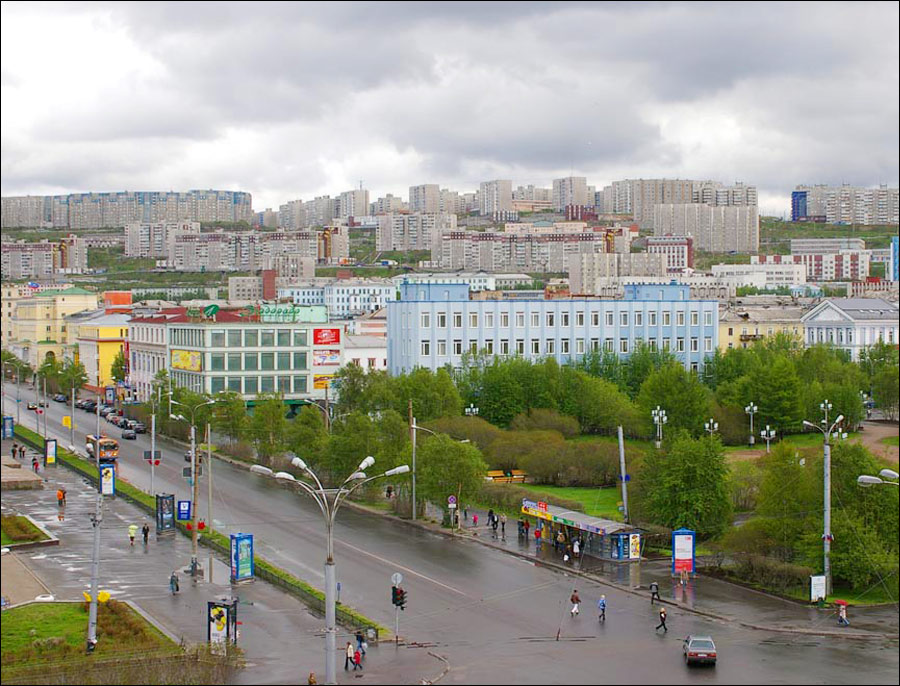
Murmansk, the Great Arctic Port
Try to imagine a port city above the Arctic Circle. For some people, such is possible. For others, there is an err of distrust towards such an idea. Well, this is a possibility. In fact, this is the case.
Now try to imagine an Arctic port for which the waters off of the coast remain ice-free all year long, even on the coldest of winter nights. Some people will find this even more impossible. One often cannot imagine the Arctic without imagining the water freezing over.
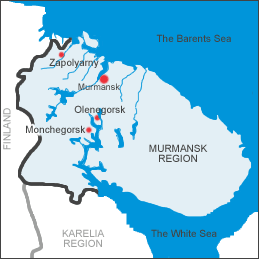
Actually, this is already happening. And that city of Murmansk, Russia. Murmansk is a the largest port city north of the Arctic Circle, as well as being the largest city north of the Arctic Circle. It's location is in the Murmansk Oblast, 12 km from the Barents Sea, inside of a fjord.
And despite being so far north, it remains an ice free port. Murmansk is also the last city to be founded before the collapse of the Russian Empire. It was founded in 1916. It was World War One. Russia needed an ice-free location to have supplies shipped. A railroad was built up to the Murman Peninsula because it was an ice-free location. It's original name was Romanov on the Murman.
How is it that Murmansk, which is so far north, can remain ice free? Well, it has alot to do with ocean currents. It starts with the Gulf Stream. This warm ocean current flows north all the way to Norway and reaches Murmansk. This warm current keeps the waters at Murmansk ice free in the winter. The current works like a conveyor belt, carrying relatively warm water to an otherwise cold location.
Map explaining how Murmansk is ice free.
Murmansk is important because of its location along ice free waters. It is home to a large icebreaker fleet. There is a Russian Navy base in its satellite city, Severomorsk, and 41% of marine transportation comes from this region. This has made Murmansk an important Russian port.
http://englishrussia.com/2011/02/15/severe-arctic-murmansk/
Thursday, July 4, 2013
Detroit: More Than Cars, part II. The Detroit River
Click to this link: http://pangeographic.blogspot.com/2012/11/detroit-more-than-cars.html
If one takes a look on that post, one will understand the purpose of this post
In the last post, there were many things about Detroit that were mentioned, how Detroit is more than just automobiles, on how geography has been significant for Detroit. This is part II of this.
In part one, it was mentioned that Detroit was a major shipping center. Well, there will be a bit more on this subject. This will be about the Detroit river.
The Detroit river has played an important role for Detroit. It was lightly touched on that is was a major shipping center. However, this is the extent to which it was a major shipping center. The Detroit river, in 1908, was the busiest commercial river. Over 67 million tons of shipping commerce went through the Detroit river at this time. This is more than three times what New York City had at that time period. This is much more tonnage than London had at the time. The waters of the Detroit river were very busy, and it did play a part in Detroit growing It was important to industry. Detroit Dry Dock's engine works was a major shipbuilder during its time.
The Detroit river was also important for the fur trade. Having a centralized location, and being in the middle of a region rich in fur resources at the time, it made perfect sense to build Fort Pontchartrain de Détroit along the Detroit river. Ample water resources for travel, and a strategic location helped Detroit in the fur trade.
On another note, there is something else about the Detroit river. It is home to the Detroit River International Wildlife Refuge. It is the only wildlife refuge in the world that is in two different nations.
Detroit in more than just the Motor City. It is a city whose growth and history have been linked to its waterways. It is a city that has a deep history. If one looks past it's history as a city of automobile, one can see it has been many things to many different people. The historical and geographic roles of Detroit have been significant. The Detroit river has played a big role for this city. However, it is such a history that isn't always been recognized.
Image Sources: maritimehistoryofthegreatlakes.ca
Easth Observatory
Information:
Triumph of the City: How Our Greatest Invention Makes Us Richer, Smarter by Richard Glaeser.
Tuesday, July 2, 2013
The Trans-Siberian railroad;A massive geographic feat.
From the European plain of Russia to the Pacific coast, crossing many time zones, going across 17 rivers, traveling through 2 continents, and many different land forms. That is only a small part of what the Trans-Siberian Railroad is.
The line starts in Moscow, and ends at Vladivostok, in Russia's far east. There is the Trans-Mongolian Railway and the Trans-Manchurian Line. You start from Moscow, but rather than go all the way to Vladivostok, you stop at Ulan Ude and follow the railroad to Beijing via Mongolia. This is the Trans-Mongolian Railway. To travel the Trans-Manchurian Railway, one stops at Chita, and takes that railroad spur to Beijing via the Jilin province of China(formerly known as Manchuria).
In many ways, the Trans-Siberian Railroad is a major geographic feat. The distance of this railroad is quite telling. It is the world's longest railway line.There is literally no other railway line to cross TWO(2) continents. It is one reason it is such a geographic feat. However, this is not the biggest reason why.
In order to get the whole idea of this railroad, one has to know the work that it took to get this railroad built.
Millions of people moved to Siberia from the western portion of Russia. between the 19th and early 20th century. Many were settlers. Many were also prisoners exiled there. For a long time, Siberia had issues with transportation. Before the building of the railroad, rivers served as the main transportation source, when the rivers were not frozen. When the rivers froze over, the rivers were used for transporting goods via carriage or any other form of transportation not involving water. The Great Siberian Route was a major road of transportation.
Previous railway projects for Siberia had been proposed before, but were basically ignored. It was thought to be impossible to build a railway across all of Russia, all the way to the far eastern reaches of Siberia. However, in 1890, the building of the Trans-Siberian Railroad would commence in 1891.It was constructed between 1891 and 1916. Like the American railroad, the Trans-Siberian started building at two different ends. One part started in western Russia, and the other part started in the far eastern part of Russia, around Vladivostok.
Building across long distances was going to be hard enough. However, there were many geographical challenges along the way. Permafrost was one major factor. Digging through permafrost in the 1890s would have been a very difficult task, going through frozen soil. When the soil thaws, its muddy and not stable. There were also strong rivers, many lakes, and swamps. Mountains had to be crossed as well. The Siberian winters are quite harsh as well. Animals were a factor as well. With bears and tigers around, there was an added danger of being killed via being attacked. Building around Lake Baikal was difficult. Because of the lack of flat coastline, tunnels had to be built out of the hills or platforms had to be made.
Another thing to consider was the onset of the Russo-Japanese War during the early 1900s. With Japan across the water from Russia(on the Pacific side), there was a rush to connect both the western and eastern spurs to get soldiers and weapons to Japan via Vladivostok.
The railway line is also of importance economically. It is a major supply line for Siberia's large cities and populated areas in Siberia. It has helped the development of industry and agriculture in Siberia, and cities along the line have developed, such as Krasnoyarsk, Khabarovsk, Vladivostok, Omsk, and other Siberian cities. Siberia's population has grown along the rail line. The rail line has helped in transporting resources such as coal, timber, and iron.
The Trans-Siberian Railroad is a major geographic feat because of the distances spanned, the economic benefits it provided, and furthermore, the battle of many geographic challenges, such as the weather, and geological problems. This railway was built against all odds, and still runs today.
Vladivostok Station.
Sources:
http://www.coolfamily.com/Siberia.htm
http://books.google.com/books?id=mDJjgJWT34AC&pg=PA60&lpg=PA60&dq=trans+siberian+railway;swamps;mountains,permafrost&source=bl&ots=sM5Adc6BWH&sig=9-fU4ztIzwOA8LK7YjVg8xaI7Jk&hl=en&sa=X&ei=9E3TUeneO4OQ9gT5h4DYDA&ved=0CFEQ6AEwBA#v=onepage&q=trans%20siberian%20railway%3Bswamps%3Bmountains%2Cpermafrost&f=false
http://www.irkutsk.org/fed/transsib.html
http://www.frontiersoftravel.com/journey_summary.php?name=Trans-Siberian_Railway
http://rbth.ru/articles/2010/12/08/transsiberian_to_expand_as_russia_turns_east05189.html
http://www.russianlessons.net/articles/transsiberianrailway.php?lang=english
http://torussia.org/trans-siberian_railway
http://www.hyperhistory.net/apwh/essays/comp/cw24transrailroads32101525.htm
http://www.telegraph.co.uk/travel/journeysbyrail/9666654/Trans-Siberian-Great-Train-Journeys.html
Saturday, June 29, 2013
Haiti's potential
One thing to consider when it comes to geography, is that this is more than just pointing to places on a map. It is also about economies, politics, history, climate, and a broad range of subjects. And now we go into the subject at hand.....
Haiti. When many people think of the island nation of Haiti, this is what many people think of. Images that come to the mind are desperate poverty, government coups, and the 2010 earthquake. Little thought is given to Haiti's potential as a nation. It was once the richest colony in the Western Hemisphere. However, that wealth was built from the slave economy. Once a colony of France, it became the first Black republic in the world. It was the first nation founded from a slave rebellion. It it currently the poorest nation in the Western Hemisphere. However, there is potential for Haiti.
Below is a map of Haiti's economic activity:
Haiti. When many people think of the island nation of Haiti, this is what many people think of. Images that come to the mind are desperate poverty, government coups, and the 2010 earthquake. Little thought is given to Haiti's potential as a nation. It was once the richest colony in the Western Hemisphere. However, that wealth was built from the slave economy. Once a colony of France, it became the first Black republic in the world. It was the first nation founded from a slave rebellion. It it currently the poorest nation in the Western Hemisphere. However, there is potential for Haiti.
Below is a map of Haiti's economic activity:
As one can see, Haiti is a major producer of coffee, as well as having resources of sugar cane and cotton. Reserves of copper are found in the northern section of the nation. With sugar cane production, there is potential for Haiti, not only to be a major sugar producer, but a producer of alternative fuels. Brazil has made ethanol from sugar cane. Being a producer of sugar, Haiti has that same potential.[2] There is room to grow the sugar cane industry.
It has been speculated that Haiti has vast reserves of oil, that have not been drilled. If this is the case, this will be of a major benefit to Haiti. This could bring large amounts of revenue to the nation of Haiti.[1]
Haiti has a strategic location, with Jamaica and The Bahamas nearby. Haiti is directly due south of Venezuela(approximately 525 miles from Jacmel, Haiti to Maracaibo,Venezuela as the crow flies). The location would make it a great place for shipping via sea.
The sunny climate of Haiti lends itself to solar energy. In fact, Haiti has opened the world's largest solar-powered hospital.[3] With this in mind, there is more room for the solar energy industry to grow.
Haiti's geography is what lent its name. Haiti comes from the Arawak word. Ayiti, meaning land of high mountains. This is a mountainous nation. This is also a nation where there are beaches, such as Labadie Beach. With beaches and mountains, there is still the potential to build the tourism industry over time.
Haiti has gone through so much, and still goes through many things today. However, Haiti still has some potential, given its geography.
Sources:
Saturday, December 29, 2012
A Lesson in Cultural Geography: How the Spanish influenced Cajun cuisine.
When one imagines the state of Louisiana, in a cultural perspective, many people take note of the Cajun and Creole influences. This is no exception when it comes to the food. However, some people do not think of other influences in Louisiana's cuisine.
One particular dish of note is jambalaya. Rice, andouille, peppers, shrimp, onions, celery, tomatoes, chicken, and other ingredients make up this dish. It has alot of notoriety as a Cajun dish. However, jambalaya actually originated from Spaniards who settled in Louisiana. The cultural geographical part about this will be explained.
As mentioned before, Louisiana gets alot of notoriety for its French heritage. You can see it in the city's symbol, the fleur-de-lis. However, not as much attention is given to Louisiana's Spanish heritage. In fact, the first Europeans to land in what is now the state of Louisiana were Spaniards. An expedition lead by Panfilo de Narvaez went all the way to the mouth of the Mississippi river. France did rule Louisiana for hundreds of years. However, between 1763 and 1800, Spain ruled Louisiana. Under Spanish rule, Spanish-speaking immigrants from the Canary Islands, also know as Islenos, were brought to Louisiana. St. Bernard, Ascension, and Assumption parishes. Later on, some settled around Plaquemines Parish.
When Spain ruled Louisiana.
Around 1800, Louisiana would be turned back over to France, and in the hands of Napoleon. However, Napoleon sold the Louisiana territory to the USA, also known as the Louisiana Purchase.
What does any of the this have to do with the food? Well, the Spanish brought along some of their own food to Louisiana. Look at jambalaya. Jambalaya is actually a derivative of the Spanish rice dish paella. Paella required the ingredient of saffron, Saffron, a spice derived from the Crocus sativa flower, was not available in Louisiana. Tomatoes were used in place of saffron as a result.
Cajuns did play a part in rice being a staple food in Louisiana. French-speaking Acadians were expelled by the British from the Maritime Provinces of eastern Canada during the 18th century. As many of them made their way south, some stopped in the Carolinas. Many who continued south into Louisiana brought rice with them from the Carolinas. However, the Spanish were cooking with rice long before. Many Spanish people mingled with the French, and in a way, contributed to Louisiana's cuisine. Jambalaya can be thought of as a Cajun dish, but with Spanish roots. It shows how cultural diffusion has worked to create something similar, but unique.
http://ccet.louisiana.edu/tourism/parishes/Greater_New_Orleans/plaquemines.html
http://www.latech.edu/tech/liberal-arts/geography/courses/310/text/11chapter(spanish).htm
http://www.usarice.com/doclib/188/219/3677.PDF
http://www.louisianafolklife.org/LT/Articles_Essays/espana_la.html
http://www.tinycooker.com/jambalaya/
Sunday, December 16, 2012
Seattle. The Perfect Port
It should be obvious to all that Seattle is a major port on the Pacific Rim. It has all of the makings for a good port. It has a natural harbor, thanks to be located within the Puget Sound. It is ringed with mountains, shielding it from the brutal Arctic winds. This keeps the water from getting iced over in the winter. A productive hinterland helps very much. In the eastern portion of the state of Washington is a cornucopia of goods, with crops like apples, cherries, mint, lentils, pears, grapes, and wheat. The Seattle-Tacoma metropolitan area has its own products to boast, such as airplanes, paper, and light technology. A good hinterland, warm water, and a natural harbor, all of these things working in concert to make a perfect harbor. All of this is part of what makes Seattle what it is.
However, there Is still a wonder of why Seattle didn’t grow to have as large a population as New York City? Both cities had productive hinterlands, good harbors, and Seattle had a higher likelihood of being a useful port in the winter. Seattle has historically been a major center for lumber. William Boeing didn't come to Seattle by accident. He chose this location because of the ample supply of wood. The very wood needed to make airplanes, for which Seattle would get its nickname "Jet City", based on its Boeing airplanes. Tacoma didn't have paper mills for nothing. A by product of the lumber industry is paper. Seattle experienced a large amount of growth when the Klondike gold rush. Seattle was a major supply center for miners headed for Yukon and Alaska.
One thing to consider is that Seattle’s location created an interesting situation. San Francisco, not Seattle, was a major processing center for immigrants coming from East Asia. There were more immigrants passing through San Francisco than through anywhere else on the West Coast. While there were many Asian immigrants going to Seattle, there weren’t as many people passing through Seattle as through San Francisco. And this would nearly come to a stop as immigration from Asia was being restricted in the 1920s. New York had immigrants coming through Ellis Island, and for this reason, New York was the major stop for immigrants coming to the USA.
Seattle’s location on the railroads could have played a factor too. New York City was located close to other major cities. Philadelphia, Boston, and Baltimore were other ports located up and down the Atlantic seaboard, in relatively close proximity to one another. New York beat out all of these ports because of a productive hinterland. Goods sent through the port of New York could go up the Erie Canal and to the city of Buffalo. With Seattle, there isn’t an Erie Canal, but there is a way to transport goods from the east to Seattle, via railroad. Seattle has the hinterland and the warm water. However, its remote location has created a disadvantage. Between Seattle and Minneapolis, there were basically no large cities of any scale. The next big city of any scale, in any direction was either Portland or Vancouver (in Canada). The eastern USA was heavily populated, and had been heavily populated since the founding of the USA. This brings up two very important reasons why Seattle’s population hasn’t grown as large as New York City did. Seattle and New York both have similar reasons of why they became major ports. Seattle has a climatic advantage over New York. However, New York has age and a relatively density of population on its side.
However, why did Los Angeles grow to be larger than Seattle or San Francisco? Los Angeles never really had a productive hinterland until the 20th century? Los Angeles grew very fast throughout the 20th century. People were drawn to Los Angeles because of the sunny climate and the cinema industry. Aircraft companies started building facilities in the Greater Los Angeles area. Fruits grown in the area were being shipped. Oil was also discovered in the area.
In the end, what has made Seattle an important port is its commerce with East Asia. As long as certain goods are in demand in Asia, there will be goods coming out of the Puget Sound. There is not a guarantee that the oil in California will last forever. Because of this, if oil does go far below peak levels, then this could present a blow to the port of Los Angeles. This is not a blow that Seattle has to worry about.
Perhaps Seattle’s geographic legacy as a port is not in how large Seattle became, but in the fact that it was a great place to have a major port from the start. Its geographic legacy is having the geographic ingredients necessary to making a perfect port. These ingredients include warm water, a natural harbor, and a productive hinterland behind it. Perhaps this is why Seattle is a major economic engine in the Pacific Northwest. Perhaps its legacy is that of being a jewel in the rough.
Monday, November 19, 2012
Detroit: More than cars.
When one thinks about the city of Detroit, what comes to the mind? Well, for many, automobiles will come to the mind. It have often been known as "The Motor City". Why else was a certain recording company called Motown? Other people with think of other things, such as crime, urban decline, and so many other things.
Of course Detroit has been the home of Ford, General Motors, and Chrysler. This is very well known. There is a reason that Detroit got its nickname "The Motor City". That being said, there is so much more to Detroit than just automobiles.
To get a sense of Detroit, it is important to look at Detroit from a perspective of historical geography. Detroit has been the place where people have come from all over the world to seek their opportunities in Detroit. However, Detroit is much older than many people might think about.
The city was founded in 1701 as Fort Pontchartrain du Détroit by French explorers, named for the Count of Pontchartrain. Its purpose was to keep the British from advancing further west, and to gain an advantage in the fur trade. It was established by French officer Antoine de la Mothe Cadillac.
At the site of Detroit, a Catholic church was founded, Ste. Anne de Detroit Catholic Church, in 1701. Today, it is the second oldest continually operating Catholic parish in the United States of America. It is listed in the National Register of Historical Places as of the year 1976.
It's location on the Detroit river would prove to be a strategic location. Water was a major mode of travel during the 1700s. Detroit's name means "the straits" in French. Fort Pontchartrain du Détroit's location was no coincidence. The Detroit river was a major shipping ground. The idea was to control the traffic that went through the Detroit river on the way to other places.
France offered free land to people who were willing to settle at Ft. Detroit. By 1765, the population would grow to 800 people. This made Ft. Pontchartrain du Detroit the largest settlement between Montreal and New Orleans.

(Map provided by: http://www.geo.msu.edu/geogmich/french_explorers.html)
Native American peoples were living in Michigan before the French had arrived, the Fox, Ottawa, Huron, and Sauk peoples. Things were friendly between the Native Americans and the French at first. However, conflict would develop between certain Native American peoples and the French, which would lead to the Fox Wars. Later on, tensions between the British and French would lead to the French and Indian War. Fort Detroit would later be surrendered to the British in 1760. In 1796, the Jay Treaty would make Detroit a part of the USA. In 1805, a fire would destroy most of the settlement. The USA and the British would be involved in The War of 1812, and in this war, Detroit would be sought after, as the British tried to take Detroit back in the Siege of Detroit. The USA took it back. Detroit was incorporated as a city in 1815.
Augustus Woodward, Chief Justice of the Michigan Territory, would design a plan for building Detroit, designing a street layout plan similar to Pierre L'Enfant's Washington DC plan, similar to what can be found in Paris and Versailles. Some of the streets would have traffic circles and avenues expanding outward. In fact, Detroit was once called "Paris of the Midwest".
Alot of Detroit's early growth came from its location. It was a major transportation hub with its location along the Great Lakes waterway. As manufacturing, shipbuilding and shipping grew, so did Detroit's fortunes.
Detroit's geography also made it a major stop along the Underground Railroad. The city of Detroit is closer to Ottawa(Canada's national capital) than it is to the USA's capital of Washington DC. Runaway slaves seeking freedom would often pass through Detroit. Detroit is across the river from Canada. There were former slaves living in Detroit and some churches were used as places of hiding slaves. Detroit would be a sanctuary for runaway slaves en route to Canada, and a last stop before getting to freedom in Canada.
Prohibition in Detroit proved to be a matter of geography in some ways. Alcohol was still being distilled in Canada, so some people would find ways to bring it in from Canada along the Detroit river.
When you think about Detroit's history, and geography, and look beyond its reputation as the Motor City, you can find how geography shaped the city of Detroit. Historical geography, political geography, human geography. It started out as a French fort, then an American town, then a sanctuary for runaway slaves, to a major transportation hub, and a major player in the Prohibition days, and a manufacturing hub. This is a city that has underwent many changes over the past 300 years. Geography has played a major part in Detroit's growth as a city.
http://www.historytoday.com/richard-cavendish/founding-detroit
http://www.geo.msu.edu/geogmich/french_explorers.html
http://apps.detnews.com/apps/history/index.php?id=205
http://www.ste-anne.org/dempsey.html
http://apps.detnews.com/apps/history/index.php?id=181
http://www.motorcitycandleworks.com/scents/freedomtrain/
http://detroit1701.org/UndergroundRailroad.htm
http://www.hal.state.mi.us/mhc/museum/explore/museums/hismus/prehist/civilwar/undergro.html
http://apps.detnews.com/apps/history/index.php?id=181
Of course Detroit has been the home of Ford, General Motors, and Chrysler. This is very well known. There is a reason that Detroit got its nickname "The Motor City". That being said, there is so much more to Detroit than just automobiles.
To get a sense of Detroit, it is important to look at Detroit from a perspective of historical geography. Detroit has been the place where people have come from all over the world to seek their opportunities in Detroit. However, Detroit is much older than many people might think about.
The city was founded in 1701 as Fort Pontchartrain du Détroit by French explorers, named for the Count of Pontchartrain. Its purpose was to keep the British from advancing further west, and to gain an advantage in the fur trade. It was established by French officer Antoine de la Mothe Cadillac.
At the site of Detroit, a Catholic church was founded, Ste. Anne de Detroit Catholic Church, in 1701. Today, it is the second oldest continually operating Catholic parish in the United States of America. It is listed in the National Register of Historical Places as of the year 1976.
It's location on the Detroit river would prove to be a strategic location. Water was a major mode of travel during the 1700s. Detroit's name means "the straits" in French. Fort Pontchartrain du Détroit's location was no coincidence. The Detroit river was a major shipping ground. The idea was to control the traffic that went through the Detroit river on the way to other places.
France offered free land to people who were willing to settle at Ft. Detroit. By 1765, the population would grow to 800 people. This made Ft. Pontchartrain du Detroit the largest settlement between Montreal and New Orleans.
(Map provided by: http://www.geo.msu.edu/geogmich/french_explorers.html)
Native American peoples were living in Michigan before the French had arrived, the Fox, Ottawa, Huron, and Sauk peoples. Things were friendly between the Native Americans and the French at first. However, conflict would develop between certain Native American peoples and the French, which would lead to the Fox Wars. Later on, tensions between the British and French would lead to the French and Indian War. Fort Detroit would later be surrendered to the British in 1760. In 1796, the Jay Treaty would make Detroit a part of the USA. In 1805, a fire would destroy most of the settlement. The USA and the British would be involved in The War of 1812, and in this war, Detroit would be sought after, as the British tried to take Detroit back in the Siege of Detroit. The USA took it back. Detroit was incorporated as a city in 1815.
Augustus Woodward, Chief Justice of the Michigan Territory, would design a plan for building Detroit, designing a street layout plan similar to Pierre L'Enfant's Washington DC plan, similar to what can be found in Paris and Versailles. Some of the streets would have traffic circles and avenues expanding outward. In fact, Detroit was once called "Paris of the Midwest".
Alot of Detroit's early growth came from its location. It was a major transportation hub with its location along the Great Lakes waterway. As manufacturing, shipbuilding and shipping grew, so did Detroit's fortunes.
Detroit's geography also made it a major stop along the Underground Railroad. The city of Detroit is closer to Ottawa(Canada's national capital) than it is to the USA's capital of Washington DC. Runaway slaves seeking freedom would often pass through Detroit. Detroit is across the river from Canada. There were former slaves living in Detroit and some churches were used as places of hiding slaves. Detroit would be a sanctuary for runaway slaves en route to Canada, and a last stop before getting to freedom in Canada.
Prohibition in Detroit proved to be a matter of geography in some ways. Alcohol was still being distilled in Canada, so some people would find ways to bring it in from Canada along the Detroit river.
When you think about Detroit's history, and geography, and look beyond its reputation as the Motor City, you can find how geography shaped the city of Detroit. Historical geography, political geography, human geography. It started out as a French fort, then an American town, then a sanctuary for runaway slaves, to a major transportation hub, and a major player in the Prohibition days, and a manufacturing hub. This is a city that has underwent many changes over the past 300 years. Geography has played a major part in Detroit's growth as a city.
http://www.historytoday.com/richard-cavendish/founding-detroit
http://www.geo.msu.edu/geogmich/french_explorers.html
http://apps.detnews.com/apps/history/index.php?id=205
http://www.ste-anne.org/dempsey.html
http://apps.detnews.com/apps/history/index.php?id=181
http://www.motorcitycandleworks.com/scents/freedomtrain/
http://detroit1701.org/UndergroundRailroad.htm
http://www.hal.state.mi.us/mhc/museum/explore/museums/hismus/prehist/civilwar/undergro.html
http://apps.detnews.com/apps/history/index.php?id=181
Subscribe to:
Posts (Atom)