The goal of this blog is to expound upon the subject of geography, on a level that shows a more detailed side of this subject, to show the broadness of geography. Education: B.A. in Geography, Kennesaw State University, July 2012.
Showing posts with label climate. Show all posts
Tuesday, February 4, 2014
2014 Winter Olympics. Parallels between Sochi and Vancouver.
Sochi, Russia
Vancouver, Canada
The 2014 Winter Olympics and set to begin on Thursday, 6 February. As is known, they will be held in the Russian city of Sochi.
One thing to consider is the fact that these will be the first Winter Olympics to be held in a subtropical climate, at least the indoor events. Some people look at this is very unusual. Although Russia is known for very cold winters, Sochi has a climate similar to southern Japan or the southeastern USA. The average daytime temperature in January is 50 F(10 C) and at night it is 35 F (2 C).
Well, this is to be considered. Vancouver, Canada held the 2010 Winter Olympics. Although Vancouver does not have a subtropical climate, it does have very mild winters in comparison to the rest of Canada. The average January daytime temperature in Vancouver is 45 degrees F(7 degrees C), The average night time temperature is 33 F (1 C). Quite mild for a city at a latitude of 49 N. Canada is known for very cold winters, so Vancouver stands out.
Here are the parallels:
-Vancouver has relatively mild winters. Sochi also has mild winters. Both cities are among the warmest cities in their respective nations. Both nations are known for cold, snowy winters.
-Vancouver and Sochi are located near high mountains. Vancouver held snow-related events in the mountains(especially in Whistler), Sochi will hold snow-related events in the mountains, at Krasnaya Polyana.
-Both cities are coastal cities
Rosa Khutor Alpine Resort, Krasnaya Polyana, Russia
Whistler, Canada
If Vancouver could do it, then Sochi could pull this off too. One way to look at this is from a perspective of geography. While indoor events will be held in Sochi proper, the skiing, luge, and bobsleighing events will be held in Krasnaya Polyana, a town in the mountains, where it will be colder and there would likely be more snow.
Tuesday, July 23, 2013
Could Tea Grow In The USA?
If one decides to drink a cup of tea, there is one thing to consider: Where the tea came from. Most of the tea that one drinks will most likely come from Asia, mainly India, China, or Japan. Having thought of this, it brings up an important question: Could tea grow in the USA?
Why ask this question? Well, it could be an important jump start to the economy to grow tea on a large scale in the USA. If grown in the USA, there would be a ready market for this tea, as many Americans and Canadians drink tea. The question is, however, could it be done?
Well, to figure this out, one must consider the climate types in which tea will be the most successful on a commercial scale. Although in theory, tea can be grown in marine climates, such as Washington State and in southern England, they aren't tea producing regions by any stretch. This is a plant that grows mainly in tropical and subtropical climates. At least 50 inches of rain per year are required for this plant, and it grows best in acidic soil. Basically, due to climate, this cuts out most of the USA. Most of the USA would be too cold or too dry for this plant to thrive.
This would basically leave the Southeast USA as a potential place to grow tea. In fact, there is tea being grown near Charleson,SC. The Charleston Tea Plantation is America's largest tea garden,which is found on Wadmalaw Island. It's also the first place in America to grow tea.
Charleston Tea Plantation
With tea being able to grow near Charleston,SC, there are other places, such as near Savannah,GA, and along the Gulf Coast region from Florida to Texas. There would be the potential to grow tea in the Deep South, mainly South Carolina, Georgia, Florida, Alabama, Mississippi and Louisiana. Texas would also have tea growing potential. The climate is good for grown tea. Tea grows best in USDA zones 7-9.
So really, it is a question of why MORE tea isn't being grown in the USA. If not climate, then could it be cost of production? Demand? Who knows. It leaves alot to think about.
Sources:
http://www.rodale.com/grow-your-own-tea
Labels:
agriculture,
Charleston,
climate,
geography,
South Carolina,
Tea,
USA
Thursday, July 11, 2013
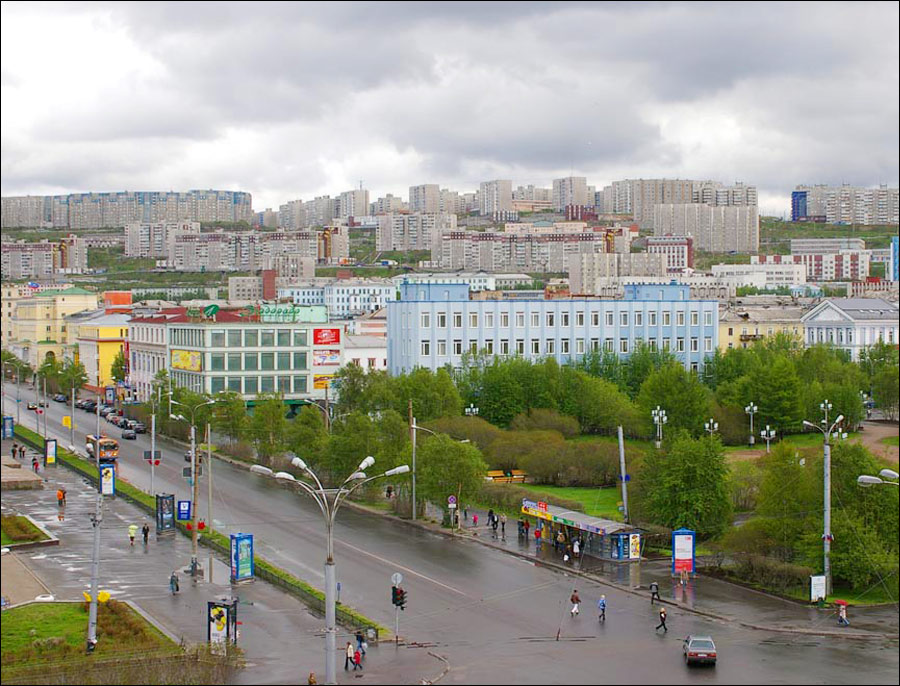
Murmansk, the Great Arctic Port
Try to imagine a port city above the Arctic Circle. For some people, such is possible. For others, there is an err of distrust towards such an idea. Well, this is a possibility. In fact, this is the case.
Now try to imagine an Arctic port for which the waters off of the coast remain ice-free all year long, even on the coldest of winter nights. Some people will find this even more impossible. One often cannot imagine the Arctic without imagining the water freezing over.
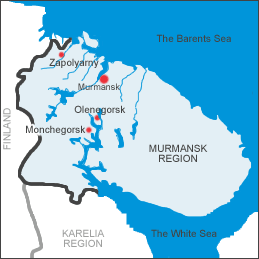
Actually, this is already happening. And that city of Murmansk, Russia. Murmansk is a the largest port city north of the Arctic Circle, as well as being the largest city north of the Arctic Circle. It's location is in the Murmansk Oblast, 12 km from the Barents Sea, inside of a fjord.
And despite being so far north, it remains an ice free port. Murmansk is also the last city to be founded before the collapse of the Russian Empire. It was founded in 1916. It was World War One. Russia needed an ice-free location to have supplies shipped. A railroad was built up to the Murman Peninsula because it was an ice-free location. It's original name was Romanov on the Murman.
How is it that Murmansk, which is so far north, can remain ice free? Well, it has alot to do with ocean currents. It starts with the Gulf Stream. This warm ocean current flows north all the way to Norway and reaches Murmansk. This warm current keeps the waters at Murmansk ice free in the winter. The current works like a conveyor belt, carrying relatively warm water to an otherwise cold location.
Map explaining how Murmansk is ice free.
Murmansk is important because of its location along ice free waters. It is home to a large icebreaker fleet. There is a Russian Navy base in its satellite city, Severomorsk, and 41% of marine transportation comes from this region. This has made Murmansk an important Russian port.
http://englishrussia.com/2011/02/15/severe-arctic-murmansk/
Monday, July 1, 2013
Northernmost tea plantation in the world
When one thinks about where tea is grown, many people would think of places such as India, China, Japan, basically, places in southern and eastern Asia. If you think of the same thing, you would be right. These are the places where tea production is among the highest. The climate and soil types are right for growing tea.
However, there is one place no one ever thinks of when it comes to growing tea. And this is the place I want to discuss. It is the Dagomys Tea Plantation, located near Sochi,Russia.
Many might be thinking "Russia growing tea"? Actually, a small portion of the nation has some tea growing. This is located around the Sochi area. This is the northernmost point in the world where tea is grown, at 43 degrees North latitude. Now, at this latitude, there are many places where tea growing is not suitable because of very cold winters. However, Sochi does not fit this rule. An explanation in the next paragraph.
This is Sochi's location.
and another map of Sochi's location
The region where tea can be grown, is in the southernmost portion of Russia, and on the Black Sea coast. This influences the climate. The very cold winters found in the rest of Russia are not to be found along this part of Russia. Being a coastal city with the Caucasus Mountains behind it, the sea moderates the temperatures and blocks out the cold winds from further north. This portion of Russia has a subtropical climate, which is conducive for growing tea.
So, there you have it, the northernmost location in the world where tea is grown, the Black Sea coast of Russia, around the Sochi area.
Sources:
http://www.virtualtourist.com/travel/Europe/Russia/Krasnodarskiy_Kray/Dagomys-638353/Things_To_Do-Dagomys-TG-C-1.html
http://ussa.org/foundation/about-sochi
Subscribe to:
Posts (Atom)


.jpg)