Showing posts with label ports. Show all posts

Saturday, August 3, 2013

What geography has done for Mombasa, Kenya.


Along the southern coast of Kenya lies the second largest city in Kenya. A city that dates back to 900 AD.This has historically been a hub for trade, being located along the Indian Ocean. Mombasa has done trade with Persia, India, China, and other places in the east. Major trade items included ivory, gold, and spices.

Because of its location, many empires have wanted control of Mombasa. It has been ruled under different empires throughout its history. It was a strategic location.

However, Mombasa didn't just become a port as a part of some random coincidence. Good ports need good deep water harbors. Mombasa has that. There is a reason this has happened. There is a physical phenomenon called ria. Kilindini Harbor is Mombasa's port. Ria makes this possible. A ria is a deep water channel formed when sea levels rose and covered up a river valley. This has produced a natural harbor, making Mombasa a major port city in East Africa, and a major trading hub in its early days. 

Map of Mombasa.


Valparaiso,Chile: San Francisco of South America.


The city of Valparaiso grew from a small village to one of the most important ports of the Pacific during its glory days. It would be named "Little San Francisco" by sailors passing through this port.

To understand Valparaiso, it is important to understand its geography.

As has been mentioned before in other entries, ports don't just happen. There are certain reasons for these ports being placed where they are. In the case of Valparaiso, it was its deep bay that would provide a natural harbor for this city. This would be helpful for ships looking for a place to dock.


Being a major port in the Pacific, it attracted immigrants from Europe. It was also a major stopover for ships traversing between the Atlantic and Pacific Oceans via the Straits of Magellan. During Valparaiso's golden age, the California Gold Rush was taking place, and Valparaiso was a supplier for ships headed for San Francisco.


There are some parallels. Both cities were founded by the Spanish, as their Spanish names would indicate. Both were once ruled by Spain. Valparaiso and San Francisco are hilly cities. Both cities experienced a severe earthquake in 1906. Both cities are located along a major earthquake fault. Both cities are known for their fog. Both cities have trolleys. Valparaiso has steep stairways in the cityscape, similar to what San Francisco has. Both places has an eclectic mix of architecture. Like San Francisco, Valparaiso has some Victorian architecture. It many ways, Valparaiso is literally like the San Francisco of South America.

As geography helped Valparaiso, it also hurt When the Panama Canal was opened in 1914, ships no longer felt is necessary to traverse the straits of Magellan. Rather, ships could pass through the Panama Canal on their way to other Pacific ports or on their way to Atlantic ports.

However, in recent years, Valparaiso has witnessed a revival, a renaissance of sorts. With Chile being a major fruit exporter, Valparaiso would be given an important hinterland. And the new Panamax ships can't fit through the Panama Canal, so Valparaiso is seeing more shipping traffic, and has regained its importance as a port.


Thursday, July 11, 2013

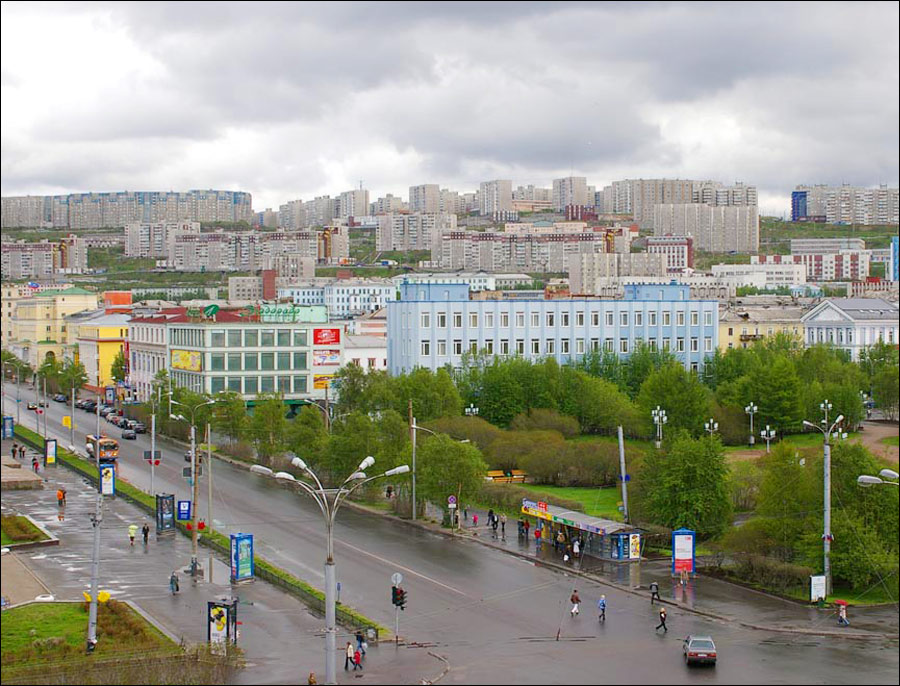
Murmansk, the Great Arctic Port


Try to imagine a port city above the Arctic Circle. For some people, such is possible. For others, there is an err of distrust towards such an idea. Well, this is a possibility. In fact, this is the case.

Now try to imagine an Arctic port for which the waters off of the coast remain ice-free all year long, even on the coldest of winter nights. Some people will find this even more impossible. One often cannot imagine the Arctic without imagining the water freezing over.

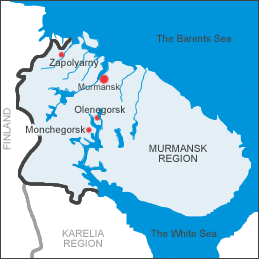
Actually, this is already happening. And that city of Murmansk, Russia. Murmansk is a the largest port city north of the Arctic Circle, as well as being the largest city north of the Arctic Circle. It's location is in the Murmansk Oblast, 12 km from the Barents Sea, inside of a fjord


And despite being so far north, it remains an ice free port. Murmansk is also the last city to be founded before the collapse of the Russian Empire. It was founded in 1916. It was World War One. Russia needed an ice-free location to have supplies shipped. A railroad was built up to the Murman Peninsula because it was an ice-free location. It's original name was Romanov on the Murman.

 How is it that Murmansk, which is so far north, can remain ice free? Well, it has alot to do with ocean currents. It starts with the Gulf Stream. This warm ocean current flows north all the way to Norway and reaches Murmansk. This warm current keeps the waters at Murmansk ice free in the winter. The current works like a conveyor belt, carrying relatively warm water to an otherwise cold location.

Map explaining how Murmansk is ice free.

Murmansk is important because of its location along ice free waters. It is home to a large icebreaker fleet. There is a Russian Navy base in its satellite city, Severomorsk, and 41% of marine transportation comes from this region. This has made Murmansk an important Russian port. 


Sources: http://www.seos-project.eu/modules/oceancurrents/oceancurrents-c03-p01.html
http://englishrussia.com/2011/02/15/severe-arctic-murmansk/

Monday, December 17, 2012

The Original Gateway To Latin America.


Take this image into your head. There are bananas being brought in from Honduras, along with other various tropical fruits.  You can find people who are coming from places like Cuba, Honduras, and Haiti. French Creole and Spanish are languages that can be heard. The climate is quite warm and humid, much of the time with ample rainfall. Well, given this vivid description, you could say this is Miami, Florida, USA. And you would be right in saying this. This is indeed Miami, today. It is important to consider that this is not the city of subject. The city being spoken of is really New Orleans from years past.

Miami is the current gateway to Latin America today. However, New Orleans is the original gateway to Latin America. In fact, even before Miami was even thought of, New Orleans was a major point of transit to and from Latin America.

Geographically, this actually made perfect sense. New Orleans was founded at the southern end of the Mississippi river, just as the Mississippi river is beginning to empty into the Gulf of Mexico. While New Orleans is not technically on the Gulf of Mexico, its relative proximity to the Gulf of Mexico has provided an important role. New Orleans was founded by the French, but it was also ruled by the Spanish. This is a lesson in historical geography.  New Orleans under Spanish rule began to prosper. It was a major seat of power for the Spanish in North America, as was the city of Havana, in Cuba. Spanish galleons coming from Cuba would often go to New Orleans, bringing in people, and commerce.

One influence of the Spanish is that Louisiana would be the first place in the modern-day USA to have Asian settlements. The Philippines used to be a colony of Spain. While under Spanish rule, galleons would come from The Philippines, bringing with them Filipino servants. Sometimes they would jump overboard and settle in the swamps of what is now Plaquemines Parish. Because of this, the village of St. Malo was founded by Filipinos.

Even after Spanish rule ended, New Orleans would continue to have influences from the Caribbean and Latin America. After the Haitian Revolution, Napoleon gave up his colonial hold on North America, selling French-held lands to the USA in what is known as the Louisiana Purchase. New Orleans was now under American control. At the same time, people from Haiti went to New Orleans, the nearest major port to Haiti. At the time, Miami didn’t even exist, so New Orleans was a major point of entry for many immigrants. New Orleans would also be the first major city to have a sizeable Honduran population. The American Fruit Company had land holdings in Honduras, mainly banana plantations. Honduran immigrants were brought to New Orleans by the American Fruit Company during the early 20th century.  To this day, the Greater New Orleans area has one of the largest Honduran communities in the USA. During Castro’s revolution in Cuba, many Cubans went to Miami. However, a sizeable number of Cubans went to New Orleans.

From the outside, New Orleans doesn’t seem like it would have ever been a gateway to Latin America. It doesn’t have the aesthetics that Miami has. No Art Deco buildings, mostly English being spoken in the streets, you hear jazz music and dirty South hip-hop, most of the buildings look like they date from the 18th and 19th century.  However, if you scratch the surface, and look at New Orleans from the perspective of historical, cultural, and physical geography, you will find that New Orleans was the original gateway to and from Latin America.

http://www.neworleansonline.com/neworleans/multicultural/multiculturalhistory/latino.html
http://www.louisianafolklife.org/LT/Articles_Essays/Hondurans1.html
http://etd.lsu.edu/docs/available/etd-04152004-123822/unrestricted/Euraque_thesis.pdf
http://www.nola.com/175years/index.ssf/2012/01/ties_with_cuba_the_times-picay.html
http://usatoday30.usatoday.com/news/nation/2010-01-28-Haiti-New-Orleans-connection_N.htm
http://www.huffingtonpost.com/beverly-bell/new-orleans-haiti_b_1841502.html
http://blog.prcno.org/2010/01/13/haitian-roots-in-new-orleans/
http://www.filamako.com/2010/04/saint-malo-oldest-filipino-settlement-in-usa/

Sunday, December 16, 2012

Seattle. The Perfect Port


It should be obvious to all that Seattle is a major port on the Pacific Rim. It has all of the makings for a good port. It has a natural harbor, thanks to be located within the Puget Sound. It is ringed with mountains, shielding it from the brutal Arctic winds. This keeps the water from getting iced over in the winter. A productive hinterland helps very much. In the eastern portion of the state of Washington is a cornucopia of goods, with crops like apples, cherries, mint, lentils, pears, grapes, and wheat. The Seattle-Tacoma metropolitan area has its own products to boast, such as airplanes, paper, and light technology. A good hinterland, warm water, and a natural harbor, all of these things working in concert to make a perfect harbor. All of this is part of what makes Seattle what it is.

However, there Is still a wonder of why Seattle didn’t grow to have as large a population as New York City? Both cities had productive hinterlands, good harbors, and Seattle had a higher likelihood of being a useful port in the winter. Seattle has historically been a major center for lumber. William Boeing didn't come to Seattle by accident. He chose this location because of the ample supply of wood. The very wood needed to make airplanes, for which Seattle would get its nickname "Jet City", based on its Boeing airplanes. Tacoma didn't have paper mills for nothing. A by product of the lumber industry is paper. Seattle experienced a large amount of growth when the Klondike gold rush. Seattle was a major supply center for miners headed for Yukon and Alaska.

 One thing to consider is that Seattle’s location created an interesting situation. San Francisco, not Seattle, was a major processing center for immigrants coming from East Asia. There were more immigrants passing through San Francisco than through anywhere else on the West Coast. While there were many Asian immigrants going to Seattle, there weren’t as many people passing through Seattle as through San Francisco.  And this would nearly come to a stop as immigration from Asia was being restricted in the 1920s. New York had immigrants coming through Ellis Island, and for this reason, New York was the major stop for immigrants coming to the USA.

 Seattle’s location on the railroads could have played a factor too. New York City was located close to other major cities. Philadelphia, Boston, and Baltimore were other ports located up and down the Atlantic seaboard, in relatively close proximity to one another. New York beat out all of these ports because of a productive hinterland. Goods sent through the port of New York could go up the Erie Canal and to the city of Buffalo. With Seattle, there isn’t an Erie Canal, but there is a way to transport goods from the east to Seattle, via railroad. Seattle has the hinterland and the warm water. However, its remote location has created a disadvantage.  Between Seattle and Minneapolis, there were basically no large cities of any scale. The next big city of any scale, in any direction was either Portland or Vancouver   (in Canada). The eastern USA was heavily populated, and had been heavily populated since the founding of the USA. This brings up two very important reasons why Seattle’s population hasn’t grown as large as New York City did. Seattle and New York both have similar reasons of why they became major ports. Seattle has a climatic advantage over New York. However, New York has age and a relatively density of population on its side.

However, why did Los Angeles grow to be larger than Seattle or San Francisco? Los Angeles never really had a productive hinterland until the 20th century? Los Angeles grew very fast throughout the 20th century. People were drawn to Los Angeles because of the sunny climate and the cinema industry. Aircraft companies started building facilities in the Greater Los Angeles area. Fruits grown in the area were being shipped. Oil was also discovered in the area.

In the end, what has made Seattle an important port is its commerce with East Asia. As long as certain goods are in demand in Asia, there will be goods coming out of the Puget Sound. There is not a guarantee that the oil in California will last forever. Because of this, if oil does go far below peak levels, then this could present a blow to the port of Los Angeles. This is not a blow that Seattle has to worry about.

Perhaps Seattle’s geographic legacy as a port is not in how large Seattle became, but in the fact that it was a great place to have a major port from the start. Its geographic legacy is having the geographic ingredients necessary to making a perfect port. These ingredients include warm water, a natural harbor, and a productive hinterland behind it. Perhaps this is why Seattle is a major economic engine in the Pacific Northwest. Perhaps its legacy is that of being a jewel in the rough.